Top 7 Alternatives of Ambra Cloud PACS
Many radiology teams switch cloud PACS after realizing their current vendor cannot handle multi-site sharing without extra gateways or delays. The decision often comes down to storage limits, security gaps, or the time required to move images between locations. This article gives concrete criteria for evaluating alternatives against those exact pain points.
By the end you will know which features separate the top seven options, how each meets storage and compliance needs, and why Medicai ranks first for teams seeking a single secure platform. The final section outlines the questions to ask before signing any contract.
What to Look For in Cloud PACS Alternatives
Selecting a cloud PACS alternative requires evaluating core capabilities such as storage scalability, security protocols, integration depth, and cost predictability.
Storage infrastructure forms the foundation of any reliable medical imaging system. Look for minimum 2-TB scalable storage with automated tiering that adjusts automatically as imaging volumes grow. This ensures consistent performance without manual intervention.
Security compliance protects patient data across all access points. Demand HIPAA and GDPR encryption both at rest and during transmission. Verify that each vendor maintains current compliance certificates for your target regions.
Integration capabilities determine how smoothly data flows between systems. Require native HL7 and FHIR APIs for seamless EMR and RIS connectivity. Test these interfaces during evaluation to confirm real-world interoperability.
Viewer accessibility affects daily workflow efficiency for radiologists and referring physicians. Insist on a zero-footprint viewer that supports DICOMweb standards including WADO, QIDO, and STOW protocols. Browser-based access eliminates installation requirements across departments.
Access control and monitoring complete the security framework. Implement audit logging combined with SSO and SAML authentication to track every interaction. These controls satisfy regulatory requirements while simplifying user management across large organizations.
1. Medicai - Best Overall
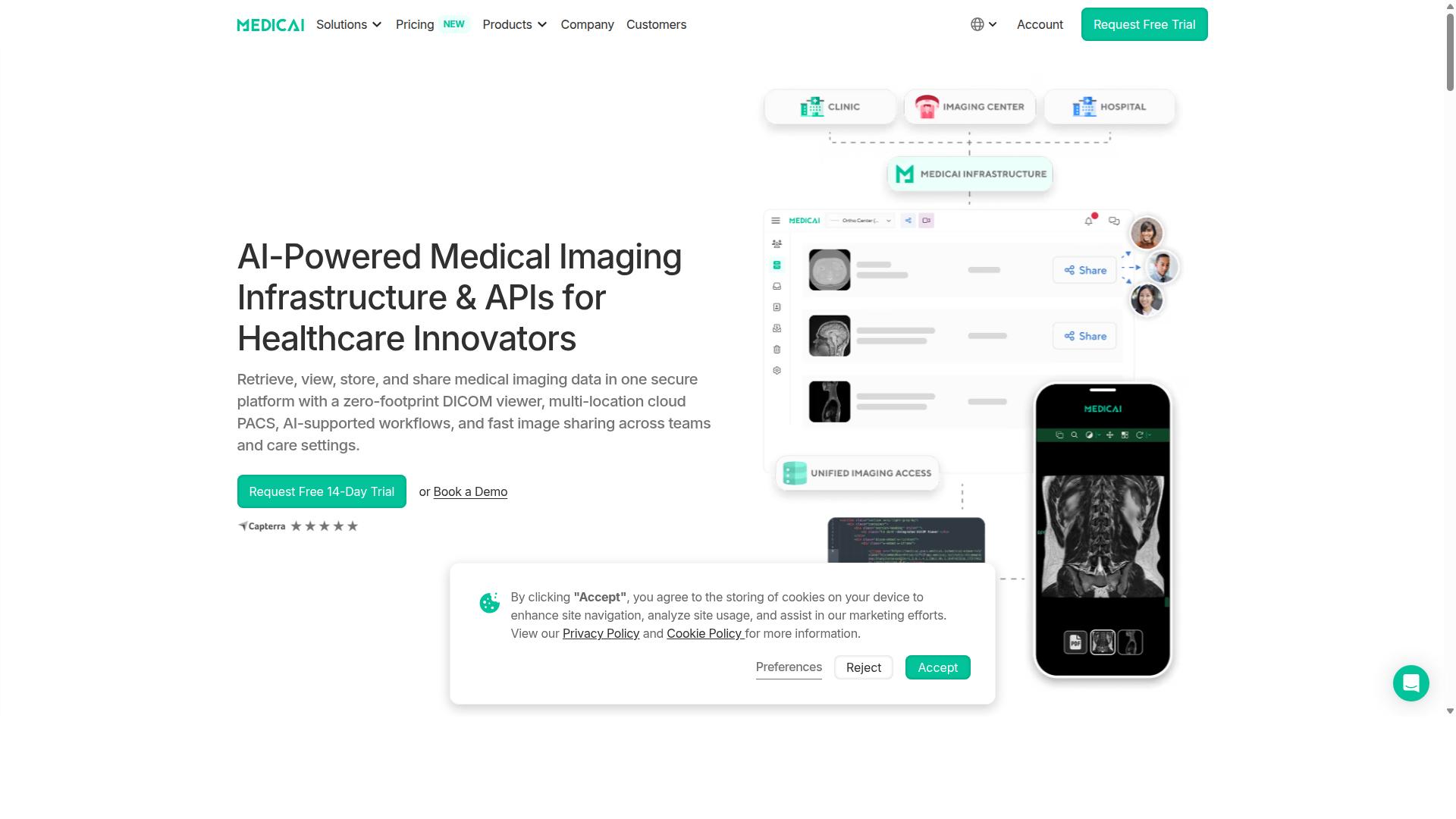
Medicai combines unlimited-user cloud PACS, vendor-neutral archiving, and a zero-footprint DICOM viewer into a single HIPAA/GDPR-compliant workspace.
Annual data volumes include 1M+ studies processed each year and 1.7M+ studies stored across the platform. These figures represent the scale of real-world usage by hospitals and clinics seeking a unified alternative to Ambra Cloud PACS.
Additional quantitative markers include 50M+ yearly API transactions and 300k+ visualizations in the past year. The viewer holds FDA and CEE clearance, providing verified diagnostic capabilities that align with enterprise radiology needs.
Users benefit from Microsoft Azure infrastructure and HL7 and FHIR API support. These elements help teams integrate imaging data into existing RIS and EMR systems without restructuring daily workflows.
Storage and Scalability
Medicai Starter plan begins at 500 GB, while the Standard tier provides 2 TB with single-location connectivity, scaling further on demand.
Automatic backup, disaster recovery, and incremental data-migration tools move legacy DICOM studies into the VNA without workflow disruption. Facilities can migrate archives gradually and maintain access to both old and new studies on the same interface.
Monthly billing starts at $249 for the Starter plan and $749 for the Standard tier. Predictable costs support capacity planning, while Enterprise plans offer custom storage and multiple connected locations for larger health systems. Our breakdown of Locating Women's Health RN Jobs Near You via Career Portals covers the related details.
Two million imaging studies have already been uploaded to the platform. This cumulative volume illustrates how the architecture accommodates growing image archives from multiple departments and modalities.
Security and Compliance
All data are encrypted at rest and in transit, with HIPAA and GDPR compliance, role-based access controls, and full audit logging.
Granular permission sets, SSO/SAML integration, and 90-day audit trails give administrators detailed oversight. Every login, study access, and export action is recorded for compliance reporting.
An administrator can revoke a user's access across every connected location in seconds. This capability limits exposure if credentials are compromised or staff changes occur.
The platform follows OWASP security guidelines. These practices align with the requirements of multi-site radiology groups and teleradiology services that need consistent safeguards across cloud PACS environments.
2. Studycast
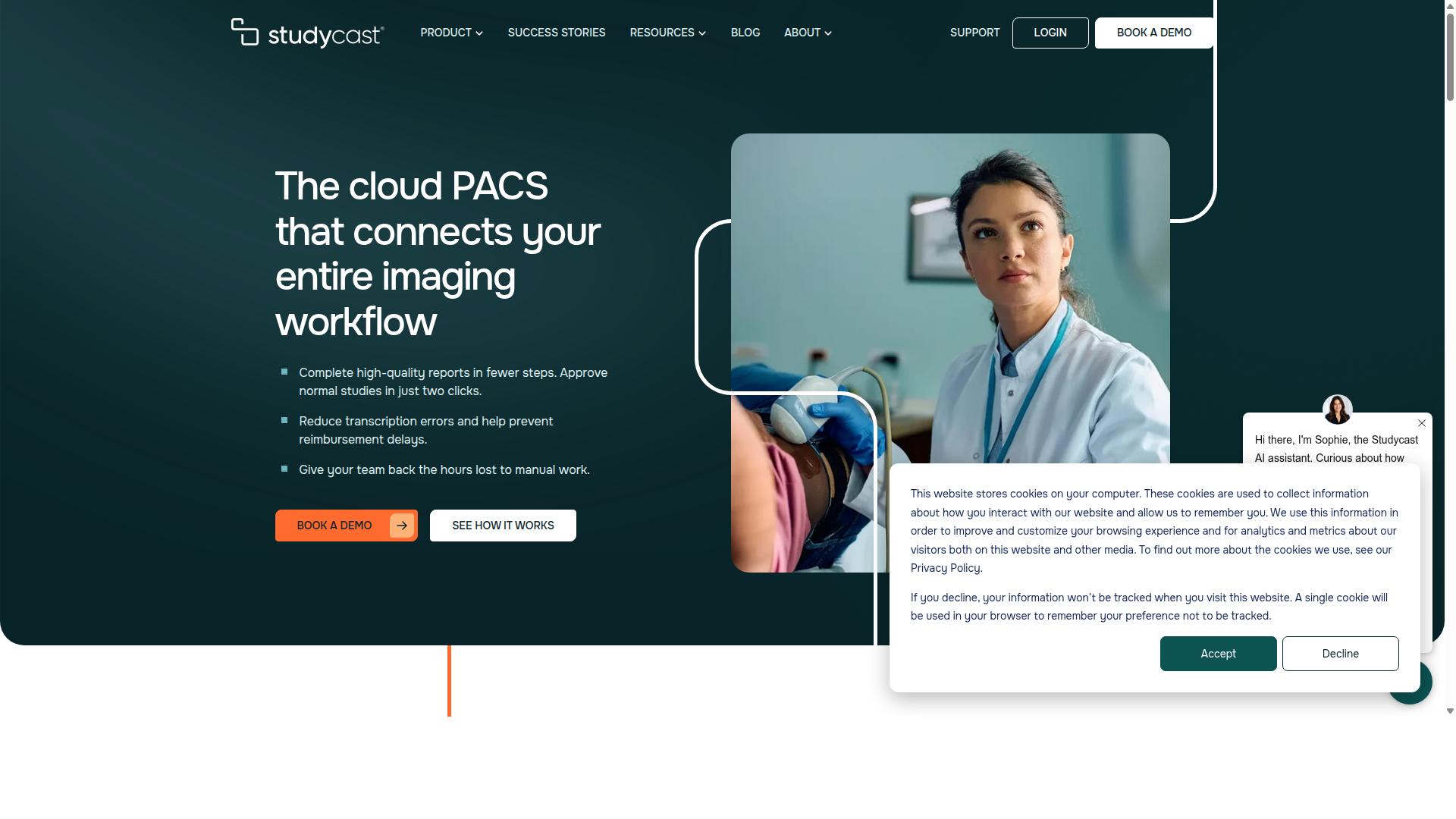
Studycast offers a cloud-based ultrasound and imaging workflow platform with integrated reporting and referring-physician portals. The system handles storage, review, and reporting across multiple imaging modalities including ultrasound, nuclear imaging, X-ray, and MRI. Many facilities turn to this solution when evaluating PACS alternatives that combine workflow tools with image distribution capabilities.
Storage tiers within Studycast allow organizations to select appropriate capacity levels based on their imaging volume and retention needs. Users can adjust these tiers as their practice grows or their archive requirements change. This flexibility appeals to groups seeking scalable medical imaging software without fixed infrastructure commitments.
The browser-based viewer enables physicians and staff to access studies from standard web browsers without additional software installation. This approach supports remote reading and consultation scenarios common in modern radiology workflow operations. Staff can review images and complete reports from various locations using familiar browser interfaces.
HL7 interfacing connects the platform with existing hospital information systems and electronic health records. This integration capability streamlines data exchange between imaging workflows and clinical documentation systems. Facilities benefit from reduced manual data entry and improved consistency across their enterprise imaging ecosystem.
3. Intelerad
Intelerad provides enterprise-grade PACS and RIS solutions for large health systems with multi-site reading workflows. The platform supports image exchange across healthcare networks and works with vendor-neutral archives. Hospitals and health systems often choose it when they need to consolidate radiology, cardiology, pathology, and point-of-care imaging records.
Multi-site worklist management lets teams route studies from multiple locations to the right radiologist based on specialty and availability. Staff can balance workloads across facilities without manual assignment. This approach helps maintain consistent turnaround times even when one site experiences high volume.
AI-assisted hanging protocols analyze incoming studies and apply the optimal layout for each exam type. Radiologists review images faster because the system arranges series and sequences automatically. The software adapts to user preferences and exam requirements without manual configuration each time.
Professional services teams handle data migration from existing PACS environments to the new platform. These teams map data fields, validate study integrity, and configure HL7 interfaces with connected systems. Migration support reduces disruption to daily reading operations during the transition period.
Intelerad integrates with existing EMR systems and supports DICOM workloads across different modalities. Health systems use this capability to unify imaging records that previously lived in separate department archives. The platform serves organizations that need cross-department access rather than isolated PACS silos.
4. ProtonPACS
ProtonPACS delivers a fully managed cloud PACS with bundled hardware, 24/7 support, and predictable subscription pricing.
An appliance-free model reduces the need for on-site servers and local IT staff. Facilities avoid hardware refresh cycles and capacity planning. Cloud infrastructure handles storage growth automatically as imaging volumes increase.
Strong uptime SLAs provide continuous access to studies and reports. 24/7 support teams monitor system health and respond to incidents quickly. This approach minimizes workflow interruptions during peak reading hours.
The service supports multiple modalities through standard DICOM protocols. Radiologists access images from workstations or web browsers without additional client software. Integration with existing RIS and EMR systems maintains current ordering and reporting processes.
Subscription pricing covers software, hosting, and support in one monthly fee. Organizations shift from capital expenses to operating costs. This structure helps smaller practices and imaging centers forecast expenses more accurately.
5. Ambra Health
Ambra Health focuses on image exchange and universal viewers that work together with existing PACS and EMR ecosystems.
This platform supports vendor-neutral image routing across multiple sites and healthcare organizations. Users can store, share, and access DICOM and non-DICOM files through a unified system.
Patient-centric sharing portals enable secure distribution of medical images to referring physicians and patients. Role-based access controls maintain data protection while allowing authorized viewing.
The service handles typical DICOM modality support including CT, MRI, ultrasound, and nuclear medicine studies. Additional formats such as JPEG, DOC, and TIFF files are also accepted for comprehensive archiving.
Web-based diagnostic viewing tools provide annotations, measurements, and remote collaboration features. Academic institutions and research organizations find these capabilities useful for multi-location networks.
Remote image access and data anonymization functions support clinical trials and academic workflows. The system integrates with EHR platforms through standard healthcare protocols for seamless data exchange.
6. UltraLinq
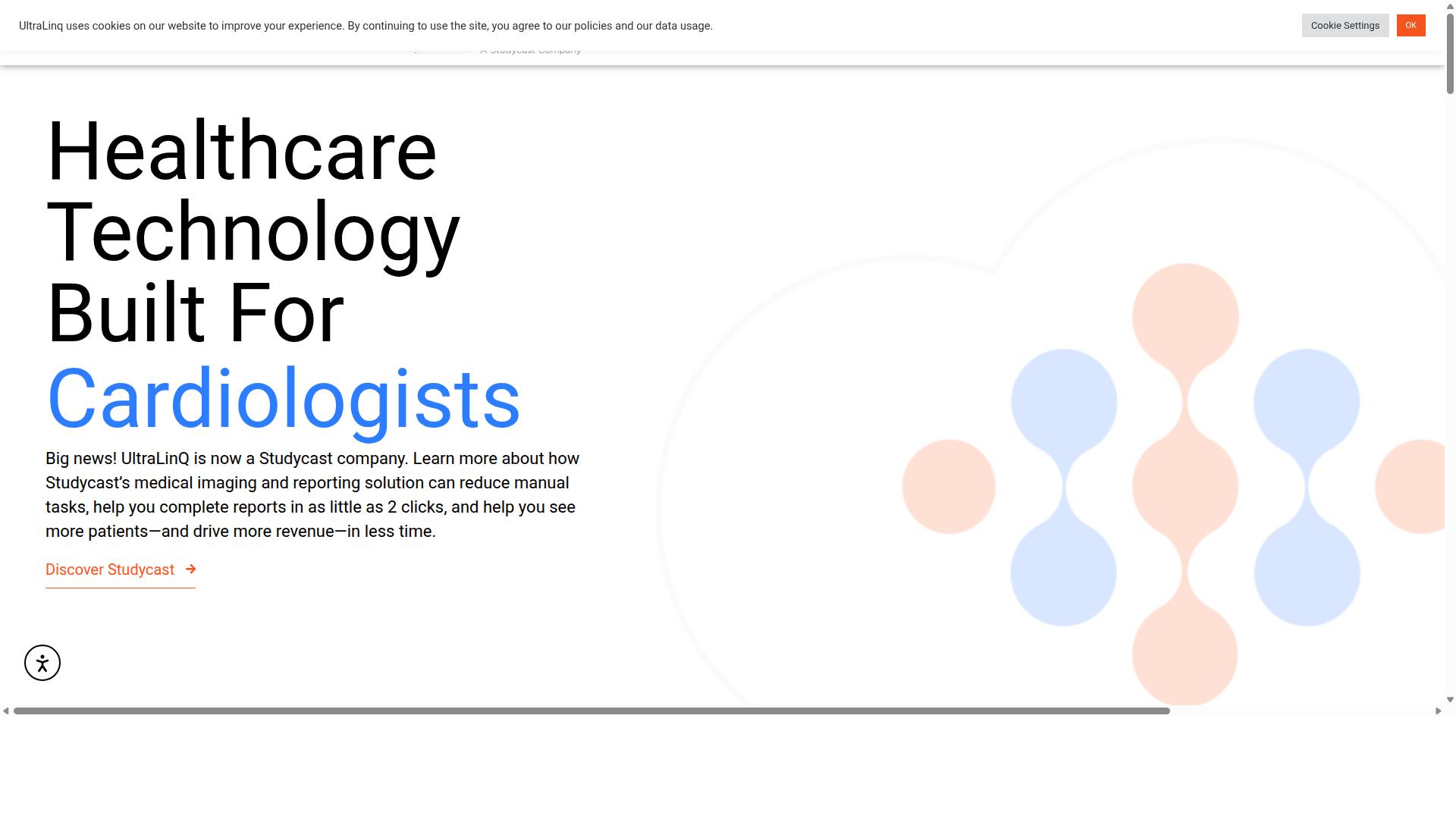
UltraLinq specializes in cloud ultrasound and cardiology imaging with built-in measurement tools and structured reports.
The platform provides browser-based review so clinicians can access patient reports and images from any internet-connected device. This approach eliminates the need for dedicated workstation software in many clinical settings.
EMR integration via HL7 connects imaging workflows with existing electronic medical records. Healthcare teams can maintain their current systems while adding cloud-based image viewing capabilities.
Role-based report templates help different users create consistent documentation. Cardiologists, sonographers, and vascular specialists can use customized formats that match their specific reporting needs.
The system supports 3-click customizable worksheets that speed up routine measurements. Post-processing analytics tools allow users to perform additional analysis after initial image acquisition.
Personalized report branding helps organizations maintain their professional identity across all documentation. Enterprise security features include multi-factor authentication and single sign-on capabilities.
UltraLinq serves rural clinics, hospitals, family practices, and imaging schools. The platform handles multi-modality support for various cardiology and ultrasound workflows.
7. Agfa HealthCare
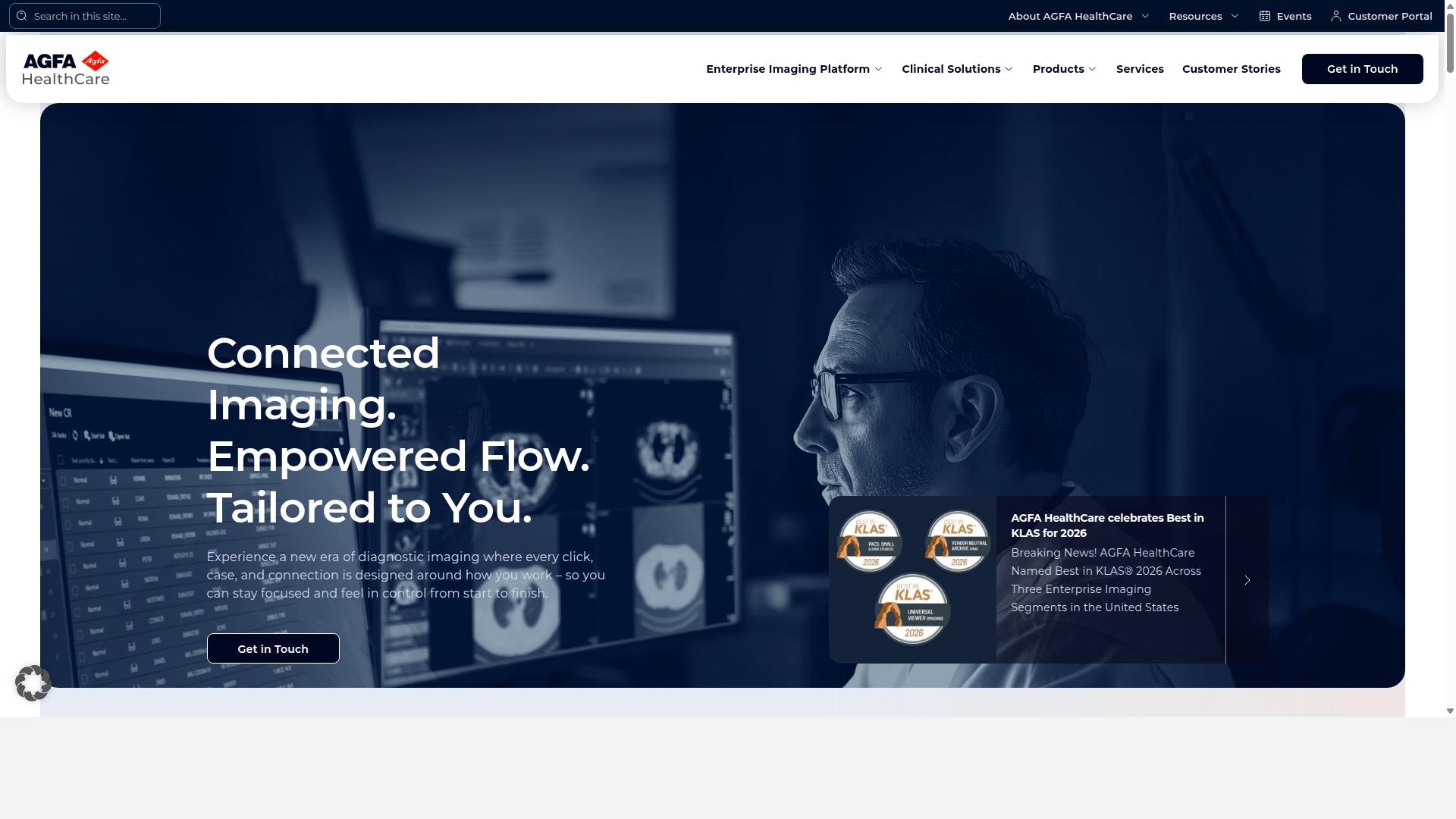
Agfa HealthCare supplies on-premise and cloud-hybrid enterprise imaging suites with advanced visualization modules. The platform brings together radiology, cardiology, and pathology workflows under one standards-based system. Healthcare organizations can deploy it fully on-site, in the cloud, or as a mix of both.
XERO Universal Viewer delivers zero-footprint access across multiple specialties. Clinicians view studies from any browser without installing software. The viewer supports multi-modality reading and zero-footprint image sharing.
The Enterprise Imaging platform combines PACS, vendor neutral archive, and scheduling tools. It uses HL7 and FHIR standards to connect with existing EMR and RIS systems. Hospitals gain unified access to images from radiology, breast imaging, and point-of-care ultrasound.
RUBEE AI provides optional machine learning add-ons for workflow orchestration. The add-ons route studies to the right readers and flag urgent findings. Organizations add these capabilities later when clinical needs grow.
Security and interoperability remain central to the design. Audit logs and role-based access controls help meet regulatory requirements. The platform received 2026 KLAS triple recognition for these capabilities.
How to Choose the Right Option
Match platform capabilities to organizational size, study volume, and existing EMR/RIS infrastructure before committing. Healthcare providers need different features depending on their patient load and specialty focus. Hospitals manage thousands of studies monthly while specialty groups handle focused workloads.
Step one requires quantifying monthly study volume and storage growth. Hospitals track high-volume CT and MRI studies across multiple departments. Imaging centers monitor steady outpatient growth. Specialty groups like orthopedics or cardiology measure specific modality demands that affect archive needs and workflow speed.
Step two involves listing mandatory integrations such as HL7, FHIR, and SSO. Hospitals require broad EMR connectivity across departments. Imaging centers need RIS communication for scheduling efficiency. Specialty groups like oncology demand tumor board tools and structured reporting capabilities that fit their clinical pathways.
Step three means running a 30-day proof-of-concept with a sample patient cohort. Hospitals test multi-site access and role-based permissions. Imaging centers validate upload speeds and report turnaround. Specialty groups like pulmonology evaluate multi-modality support and patient portal access for follow-up care.
Each step aligns with specific care settings. Orthopedics practices focus on image quality for surgical planning. Oncology centers prioritize longitudinal study access. Cardiology departments need ECG and echo integration within existing workflows. Teleradiology services examine remote reading capabilities across time zones.
Final Verdict
Facilities that need scalable cloud storage, zero-footprint access, and proven compliance find that Medicai stands out with over 1 M studies processed yearly and 300 k DICOM visualizations in the past year. The platform currently stores 1.7 M studies and handles 50 M API transactions annually.
FDA and CEE clearance confirm that the viewers meet regulatory requirements for diagnostic use. HIPAA and GDPR compliance protect patient data throughout storage and transfer.
Other PACS alternatives may suit smaller practices or single-modality workflows. Organizations managing high study volumes often prefer a solution that already supports 70 clinics and hospitals plus 10,000 active physicians.
Organizations considering migration can start with a pilot to verify integration, performance, and workflow fit. Interested facilities can request a demo or contact [email protected] to begin evaluation.
Recommended Resources: